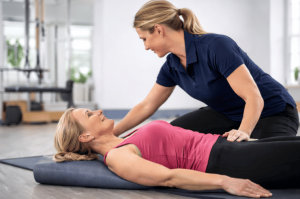
Pilates is one of the most effective ways to build strong, resilient movement habits - and when it’s delivered by a Physiotherapist, it becomes a powerful clinical tool for both rehabilitation and injury prevention.
At Macfarlane Physiotherapy, our Pilates sessions are led by a Physio who is also a qualified Pilates instructor. That means your programme isn’t "generic Pilates" - it’s tailored to your body, your goals, and any pain or injury history, with the clinical reasoning and safety you’d expect from physiotherapy care.
Book Your Assessment Today
Tailored to your injury by a qualified Physiotherapist.
Why Pilates works so well in physiotherapy
Pilates focuses on controlled movement, posture, breathing, and deep muscular support. In rehab, this is ideal because it helps you rebuild strength and confidence without overloading irritated joints or tissues.
Physio-led Pilates can help you:
- Improve core control and spinal support
- Build balanced strength (not just “stronger”, but more even and coordinated)
- Restore mobility and movement quality
- Increase flexibility in a safe, structured way
- Improve posture, alignment, and movement patterns
- Reduce recurring flare-ups by addressing the “why” behind the issue
Injury prevention: moving better, not just more
Many injuries happen when the body repeatedly compensates - for example, overworking the low back because the hips aren’t moving well, or overloading the knees because the glutes aren’t doing their job.
A Physio uses Pilates to identify and address these patterns early, helping to:
- Improve joint control and stability (especially hips, knees, shoulders, and spine)
- Build endurance in key stabilising muscles
- Reduce overload on “busy” areas like lower back, neck and knees
- Improve balance, coordination, and confidence in movement
- Support return to sport and active hobbies with more robust movement mechanics
Rehabilitation: Pilates as a safe bridge back to full function
After injury (or when pain has lingered for a while), people often lose strength, mobility, and confidence - even when symptoms settle. Pilates is an excellent way to rebuild gradually because exercises can be carefully progressed without “boom and bust”.
Physio-led Pilates can support rehabilitation for:
- Back and neck pain
- Hip and knee issues (including tendon and joint pain)
- Shoulder problems (rotator cuff pain, instability, postural overload)
- Post-operative rehab (where appropriate and guided by your Physio)
- Persistent pain conditions where graded movement helps restore trust in the body
Because it’s delivered by a Physiotherapist, your programme can be adjusted around pain, tissue healing timeframes, and any clinical precautions — and integrated with your hands-on treatment or gym-based rehab plan.
Strength, mobility and flexibility: the long-term benefits
Pilates helps you build usable strength - the kind that supports day-to-day life, work, and sport. Rather than isolating muscles in a way that doesn’t always carry over to real movement, Pilates trains strength with control and alignment.
Over time, people often notice:
- Better hip and spine mobility
- Increased flexibility without feeling “stretched and sore”
- Stronger glutes, deep core, and postural muscles
- Improved movement efficiency (less effort, less tightness)
- Better breathing control and ribcage mobility (useful for posture and recovery)
What makes Physio-led Pilates different?
A Pilates class can be brilliant - but if you’re managing pain, coming back from injury, or want a programme targeted to your biomechanics, a Physio brings extra clinical value:
- Assessment-led: we identify what’s limiting you and what needs strengthening
- Individualised exercise selection: based on your injury history and goals
- Progression that makes sense: the right exercise at the right time
- Technique coaching: so you get results and reduce flare-ups
- Integrated rehab: Pilates can complement manual therapy, loading plans, and return-to-sport rehab
Who is it for?
Physio-led Pilates is ideal if you:
- Want to prevent recurring back, neck, hip, knee or shoulder pain
- Are returning from injury and want a structured rebuild
- Feel stiff, “tight”, or unstable with certain movements
- Sit a lot for work and want better posture and strength
- Want to improve performance safely (running, golf, gym, tennis, etc.)
- Prefer guided, low-impact strength and mobility training
No previous Pilates experience needed.
How to get started
We typically begin with a physiotherapy assessment to understand your movement, goals and any injury history. From there, your Physio will recommend the most suitable option - whether that's 1:1 Physio-led Pilates, a tailored rehab plan incorporating Pilates principles, or a structured progression into ongoing sessions.
Book your assessment with Macfarlane Physiotherapy to find out how Physio-led Pilates can help you move better, feel stronger, and stay active long-term.